



 Family Repair, strengthening & anchoring
Repair, strengthening & anchoring
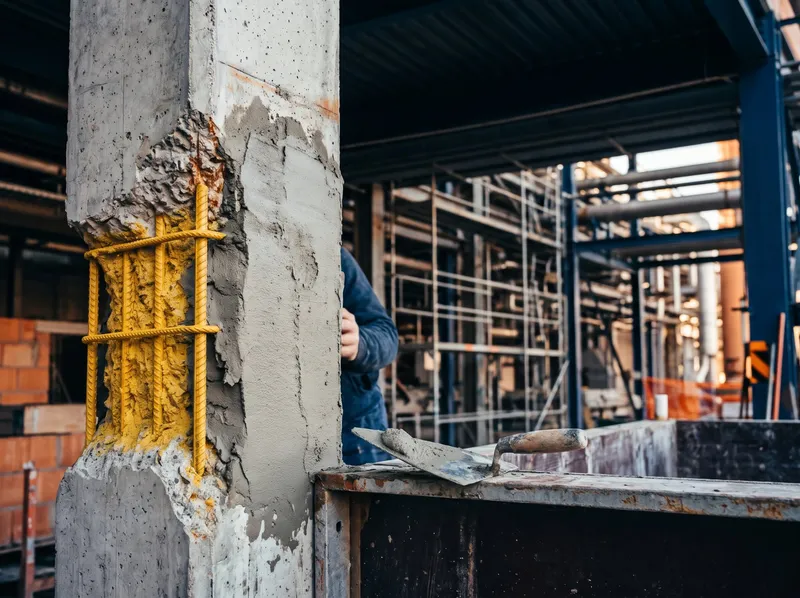
Concrete repair and protection cover the products used to diagnose, treat and protect structures degraded by carbonation, rebar corrosion, cracks, abrasion or chemical attack. Formulated to be chemically and mechanically compatible with the existing concrete, they extend the life of structures.
Ranges
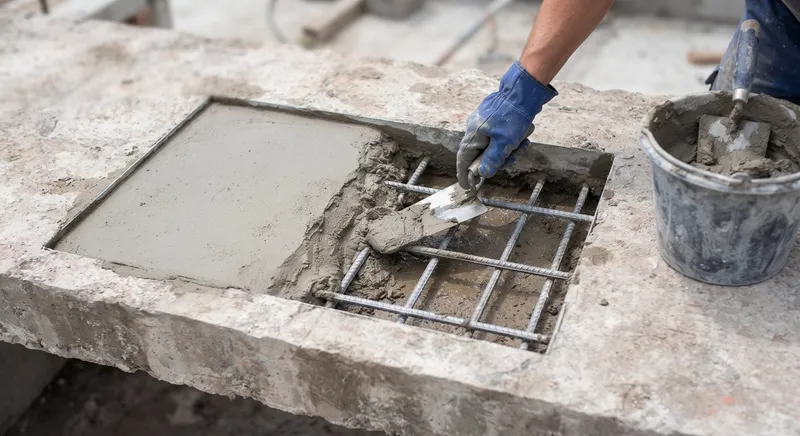
Concrete repair mortars
Reprofiling and reconstruction mortars for spalled, carbonated concrete or exposed rebar. Use them to restore the section and cover of structures, in classes R2 to R4 to EN 1504-3.
See products

Anchoring & bedding
High-performance, shrinkage-compensated mortars for precise bedding of base plates, rails, machines and equipment. Use them where levelling accuracy and load transfer are critical.
See products 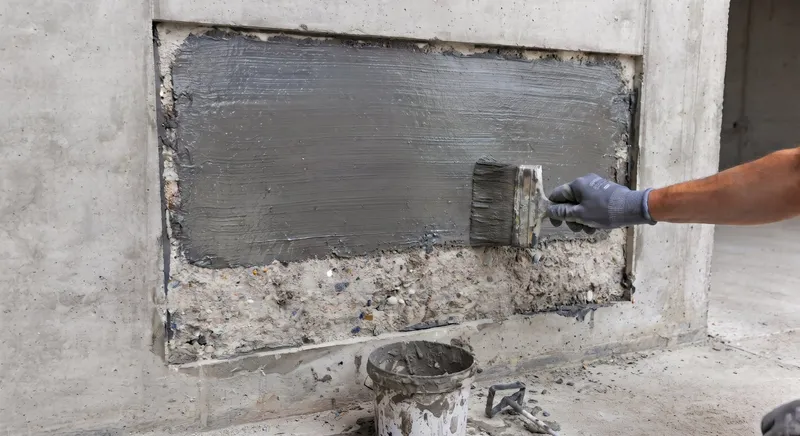
Substrate preparation & primers
Pre-repair preparation products: laitance removal, bonding slurries between old and new concrete, reinforcement passivation. Use them systematically before applying repair mortars.
See products 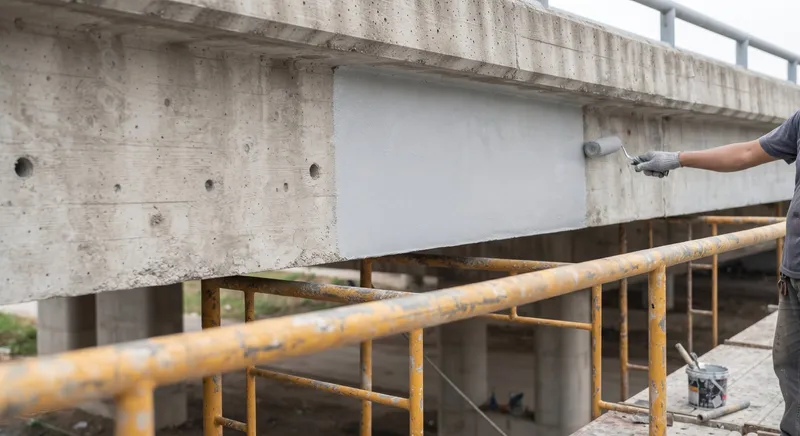
Protective coatings
Paints and coatings protecting concrete against carbonation, chlorides and chemical attack. Use them as a finish to repair systems to extend durability.
See products 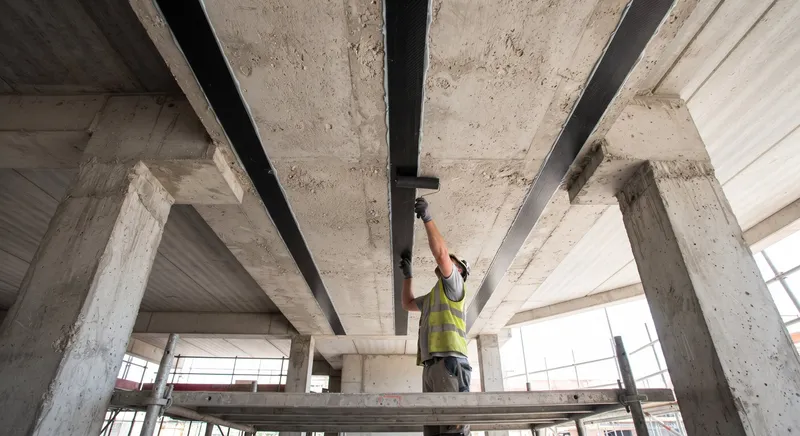
Structural strengthening
Strengthening solutions for load-bearing members: composite grids and meshes, micro-concrete jacketing. Use them to increase the load-bearing capacity of columns, beams, walls and slabs.
See products 
Crack injection
Injection resins for treating cracks in concrete, from structural repair (epoxy) to watertight sealing. Use them to restore the monolithic behaviour and watertightness of a cracked structure.
See products Frequently asked questions
What is a structural repair mortar?
A repair mortar is a product based on hydraulic binder or resin used to rebuild damaged concrete and protect the reinforcement. It restores the section, bond and durability of the structure. Concrete repair products are covered by the EN 1504 standard.
When should you repair rather than strengthen a structure?
Repair aims to restore a structure to its original state after localised damage, such as spalled concrete or reinforcement corrosion. Strengthening increases the load-bearing capacity beyond the original, for example for a change of use or an increased load. A structural survey by an engineering office guides this choice.
How do you choose a grouting or anchoring product?
Chemical resin anchoring suits the fixing of bars and rods subject to high loads. Fluid grouting mortars are used under machine base plates and structural bearings for perfect contact. The choice depends on the load, the thickness to fill and the exposure conditions.
How do you protect reinforcement against corrosion?
After removing the rust, an anti-corrosion protective coat, often based on a modified binder, is applied to the exposed reinforcement. This passivation prevents corrosion from restarting before filling with repair mortar. Treating the causes, such as carbonation or chlorides, durably completes the repair.
What precautions ensure a successful repair mortar?
Damaged concrete must be removed down to a sound, rough substrate, then dampened or treated according to the product. Application must respect the thickness per pass, and careful curing limits shrinkage and cracking. Contact our technical team to validate the system suited to your defect.
