



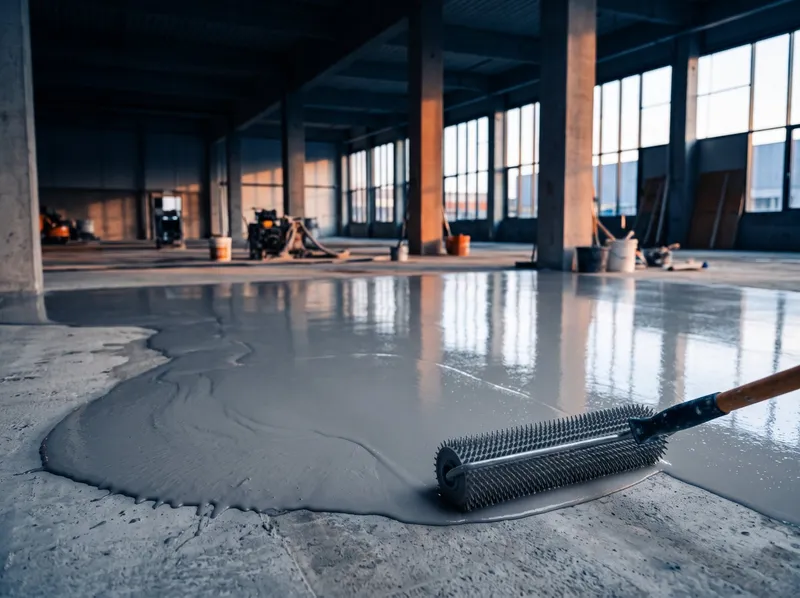
 Family Screeds, levellers & floor preparation
Screeds, levellers & floor preparation
Floor preparation and finishing determine the quality of any covering. This family brings together the mortars to level, smooth, true up and harden concrete surfaces, from high-volume levelling (screeds) to precision finishes (levellers of a few millimetres), to obtain a flat, sound substrate compatible with the final covering.
Ranges

Surface hardeners
Liquid impregnations or dry-shake mortars increasing the abrasion resistance of concrete floors. Use them on industrial floors subject to traffic and wear.
See products
Cement screeds
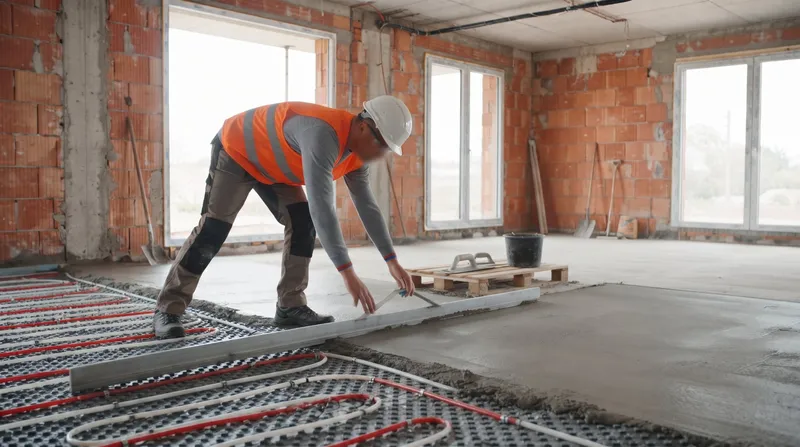
Cement-based mortars and screeds, traditional or flowing: rapid-drying screeds, self-levelling screeds, levelling fills and screeds for underfloor heating. Use them to create a flat base before laying the floor covering.
See products Frequently asked questions
What is the difference between a screed and a levelling compound?
A screed is a fairly thick layer that levels the floor and receives the final floor covering. A levelling compound is a thin coating, often self-smoothing, intended to correct flatness defects before laying. The screed structures the floor, the levelling compound finishes it.
When should you use a self-levelling compound?
A self-levelling compound is used to obtain a flat, smooth surface before laying tiles, PVC, parquet or resin. It fills small irregularities and regularises the absorption of the substrate. Check the compatibility of the product with the final covering and with the type of substrate.
How do you prepare a substrate before pouring a screed?
The substrate must be clean, dust-free and cleared of any laitance or loose parts. Depending on the case, a primer is applied to regulate absorption and improve adhesion, or an unbonded screed is provided. The choice between bonded, unbonded or floating screed depends on the substrate and the intended use of the room.
How long should you wait before laying the covering?
The waiting time depends on the thickness, the product and the site temperature and humidity conditions. Before laying, check that the residual moisture level is compatible with the covering, especially for parquet and resins. Always follow the guidance on the product data sheet.
Can you install a screed over underfloor heating?
Yes, but you must use a product compatible with underfloor heating and ensure sufficient cover over the pipes. Gradual heating up after drying is essential to avoid cracks. Contact our team to choose the screed suited to this type of work.
