


 Family Ceramic tile installation
Ceramic tile installation
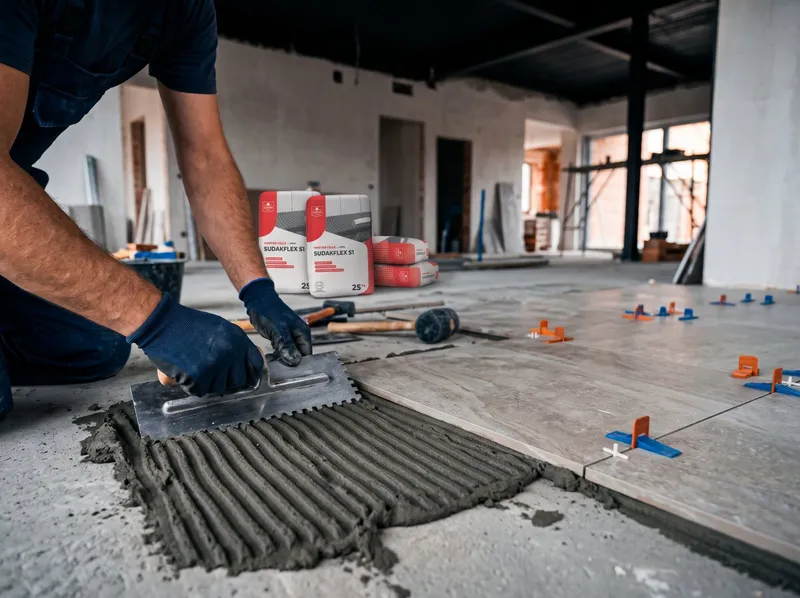
Ceramic tile installation is SUDAK Maroc's founding family and the heart of its expertise. It brings together the products for laying, grouting and protecting ceramic, porcelain, natural-stone and mosaic finishes, on floors and walls, indoors and outdoors. Products are classified to EN 12004 (adhesives) and EN 13888 (grouts).
Ranges

Standard grey adhesives (C1)
Everyday cementitious adhesives for laying ceramic tiles indoors on rigid substrates. Use them for common formats on lightly loaded floors and walls (class C1 EN 12004).
See products
Improved grey adhesives (C2)
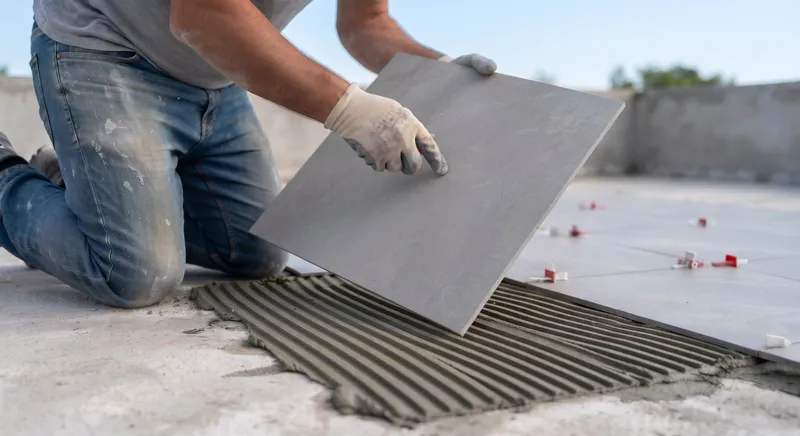
Improved-adhesion adhesives for laying indoors and outdoors on all substrate types, including low-porosity porcelain. Use them whenever loads increase (class C2 EN 12004).
See products 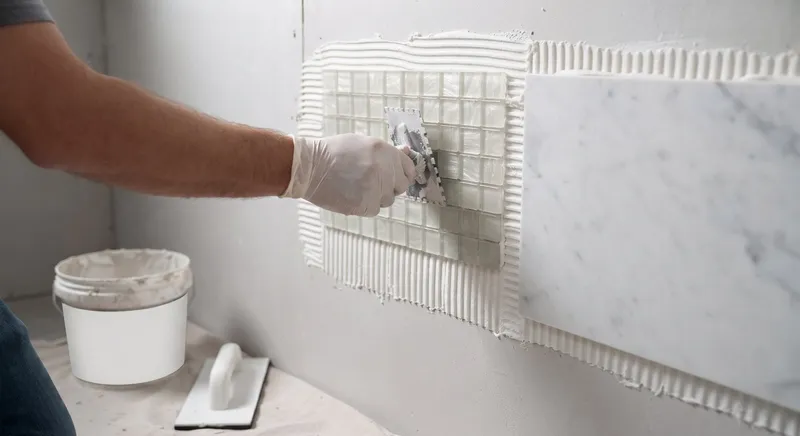
White adhesives (C1/C2)
White adhesives for laying marble, light stones, glass mosaics and translucent tiles sensitive to staining or show-through. Use them whenever the substrate colour affects the finish.
See products 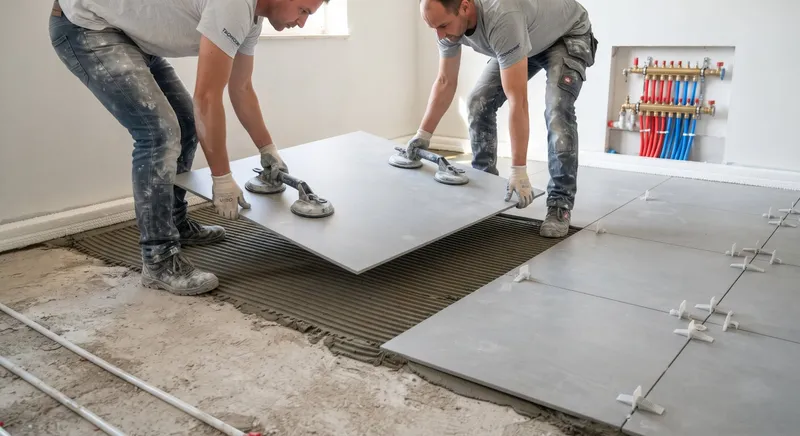
Flexible adhesives (C2 S1/S2)
Deformable adhesives absorbing substrate movement: underfloor heating, young or deformable substrates, large slabs. Use them whenever transverse deformation is expected (S1 ≥ 2.5 mm, S2 ≥ 5 mm).
See products 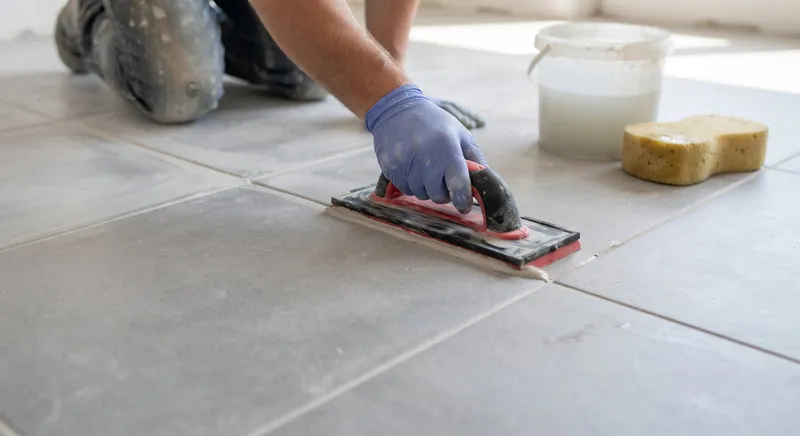
Grouting mortars
Coloured cementitious grouts and epoxy grouts for fine (< 3 mm) and wide (3–20 mm) joints, water-repellent and stain-resistant. Use them to finish and protect the installation (classes CG and RG EN 13888).
See products Frequently asked questions
What is a tile adhesive?
A tile adhesive is a bonding product used to fix ceramic tiles to a substrate with a thin bed of adhesive. It replaces traditional sand-cement bedding and provides better adhesion and regularity. Tile adhesives are classified according to the EN 12004 standard.
How do you choose the adhesive according to the tile and substrate?
The choice depends on the tile format and porosity, the nature of the substrate and the exposure to water or temperature changes. Large formats and low-porosity porcelain stoneware require high-performance, deformable adhesives. For difficult substrates or outdoors, higher class adhesives to EN 12004 are preferred.
What is the difference between single and double buttering?
Single buttering means applying adhesive only to the substrate, which suits small and medium formats indoors. Double buttering adds a layer of adhesive to the back of the tile to ensure full contact, essential for large formats, heavily loaded floors and outdoors. This technique avoids voids under the tile and debonding.
When should movement joints be provided?
Movement joints are needed on large tiled areas to absorb substrate movement and thermal variations. They are essential outdoors, over heated floors and in line with the building's structural joints. Their absence causes cracks and tile debonding.
Can you tile over existing tiles?
Yes, provided the existing tiles are well bonded, clean and degreased, with no hollow or cracked tiles. A suitable bonding primer improves adhesion, and a high-performance adhesive is recommended. A prior check of the substrate is essential; contact us to choose the safest solution.
